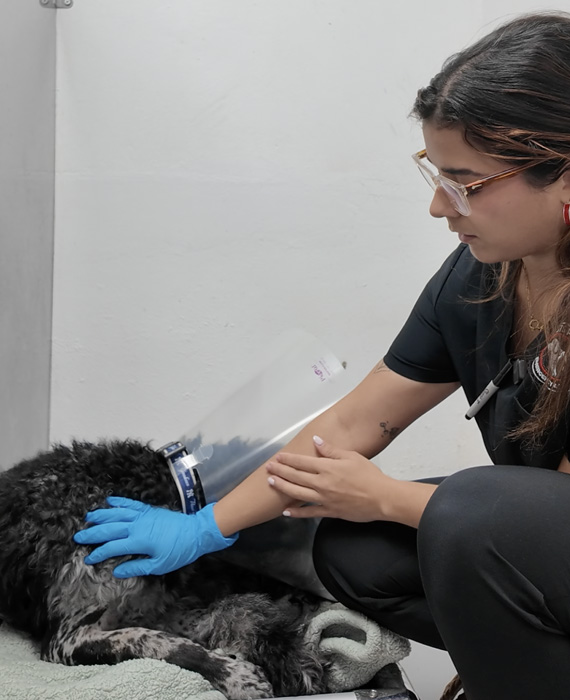
Atención Veterinaria de Emergencia 24/7
Entendemos que las emergencias pueden ocurrir en cualquier momento, es por eso que nuestro equipo de veterinarios y personal está disponible las 24 horas del día en Caguas para proporcionar atención inmediata a sus compañeros peludos.
En VETS PR, ofrecemos una amplia gama de servicios para garantizar el más alto nivel de atención para sus queridas mascotas. Nuestros servicios de hospitalización están disponibles 24/7, proporcionando un ambiente seguro y cómodo para su mascota durante su recuperación. Ya sea una enfermedad repentina, una lesión o cualquier otra emergencia, nuestros experimentados veterinarios están capacitados en procedimientos de estabilización de emergencia como la colocación de tubos torácicos, toracocentesis, abdominocentesis, transfusiones de sangre, suplementos continuos de oxígeno y control de convulsiones, entre muchos otros.
Nos enorgullecemos de contar con equipos de diagnóstico de última generación que incluyen radiografía digital y ultrasonografía. Estas tecnologías avanzadas nos permiten diagnosticar el estado de su mascota con rapidez y precisión, garantizando un tratamiento rápido y eficaz. Además, nuestro completo laboratorio de análisis de sangre y nuestra farmacia in situ nos permiten ofrecer una atención integral sin demora. En nuestro hospital, ¡su mascota dispondrá de la tecnología quirúrgica, anestésica, diagnóstica y de monitorización más avanzada del mercado!
Si usted tiene un perro o un gato, VETS PR en Caguas está aquí para ser su aliado de confianza en el proceso de la salud de su mascota. Entendemos el vínculo especial que comparte con sus amigos peludos y siempre priorizaremos su bienestar. Nuestro dedicado equipo está listo para brindar atención compasiva y experta cuando su mascota más lo necesita. Confíe en VETS PR para todas sus necesidades veterinarias de emergencia.
Cuándo buscar atención veterinaria de emergencia
- Vómitos o diarrea intensos - más de 2 episodios en un periodo de 24 horas
- Negativa a beber durante 24 horas o más
- Asfixia, dificultad para respirar o tos y arcadas incesantes
- Sangrado por la nariz, la boca, el recto, tos con sangre o sangre en la orina
- Hemorragia grave o que no cesa en 5 minutos
- Incapacidad para orinar o defecar (heces), o dolor evidente asociado a la micción o la defecación
- Lesiones en el(los) ojo(s) de su mascota
- Convulsiones y/o tambaleos
- Desorientación repentina o colapso
- Inconsciencia
- Heridas o laceraciones abiertas
- Fractura de huesos, cojera grave o incapacidad para mover la(s) pata(s)
- Signos evidentes de dolor o ansiedad extrema
- Golpe de calor o insolación
- Su mascota se ha peleado con otro gato, perro o animal salvaje
- Sospecha o sabe que su mascota ha comido algo venenoso
- Su perra o gata embarazada ha pasado más de 3-4 horas entre partos de cachorros o gatitos
Cirugía de emergencia
Si su mascota necesita cirugía de emergencia, ¡estamos aquí para usted! Por favor, llámenos inmediatamente si sospecha que su mascota necesita cirugía de emergencia.
Traumatismos/Cuidado de heridas
Las heridas producidas por ataques de animales, atropellos u otros traumatismos deben ser atendidas inmediatamente por un veterinario. Inicialmente se examina al paciente para asegurarse de que no hay otros signos de enfermedad sistémica, como hemorragias internas o costillas rotas. A menudo, la herida que se ve en la superficie es sólo la punta del iceberg y hay daños tisulares mucho más extensos en capas más profundas. Estas heridas deben tratarse quirúrgicamente para eliminar la contaminación grave y el tejido no viable sin un buen riego sanguíneo. Normalmente, los pacientes son anestesiados o sedados y las heridas se exploran quirúrgicamente para evaluar el alcance de los daños, se lavan con líquidos estériles y, en ocasiones, se colocan drenajes para evitar la formación de infecciones o abscesos. Algunas heridas cicatrizan mejor si se dejan abiertas para que cicatricen por segunda intención y requieren el control de un veterinario para cambiar el vendaje o repetir los procedimientos quirúrgicos.
Extracción de cuerpos extraños
Las mascotas con antecedentes recientes de ingesta de materiales extraños, como telas o juguetes de plástico, pueden presentar vómitos profusos y disminución del apetito debido a una obstrucción intestinal. A menudo, la obstrucción intestinal puede diagnosticarse mediante radiografías abdominales, análisis de sangre y/o una ecografía abdominal. Una vez identificada la obstrucción, es necesaria una intervención quirúrgica de emergencia para extraer el cuerpo extraño y aliviar la obstrucción. En algunos casos, los pacientes requieren cuidados de asistencia y soporte de líquidos antes de la intervención quirúrgica. Se realiza una cirugía abdominal exploratoria, y el cirujano identificará la zona comprometida del intestino. A menudo, el cuerpo extraño puede extraerse mediante una pequeña incisión en el intestino (enterotomía) o extirpando una pequeña sección del intestino comprometido (resección y anastomosis).
Obstrucción urinaria
Los gatos con antecedentes recientes de esfuerzo para orinar, sangre en la orina, falta de micción o vocalización durante la misma deben ser examinados urgentemente por un veterinario. Algunos gatos sufren reagudizaciones de la enfermedad felina del tracto urinario inferior (FLUTD), que es una enfermedad multifactorial que provoca inflamación de la uretra y dificultad para orinar. Estos pacientes a menudo pueden tratarse médicamente y con cambios en la dieta y el entorno para reducir el estrés, al menos temporalmente. En otros casos, los gatos experimentan una obstrucción uretral debida a cálculos o arenilla y tienen una vejiga muy agrandada y dura debido a la imposibilidad de orinar. Estos pacientes a menudo pueden estar sistémicamente enfermos y presentar alteraciones electrolíticas graves que deben corregirse inmediatamente. Los gatos con cálculos urinarios o arenilla necesitan ser desobstruidos urgentemente mediante el paso de una sonda urinaria bajo anestesia. La sonda urinaria suele mantenerse colocada durante 24-48 horas durante la hospitalización para garantizar que la obstrucción urinaria no reaparezca. Normalmente, los gatos son monitorizados en el hospital durante 12-24 horas después de retirar la sonda urinaria antes del alta.
Enucleación
La enucleación es la extirpación quirúrgica del ojo. Se realiza con mayor frecuencia en ojos ciegos y dolorosos que no responden al tratamiento. En los casos apropiados, la enucleación ofrece una alternativa humanitaria al dolor constante, la amenaza de metástasis de neoplasia o la eutanasia de un animal por lo demás sano. La enucleación de urgencia puede ser necesaria tras un traumatismo grave que provoque la perforación del ojo o daños en el cristalino, a menudo como consecuencia de un arañazo de gato, una mordedura de perro o un accidente de tráfico. La enucleación requiere anestesia general y puede requerir pasar una noche en el hospital. Los perros ancianos pueden necesitar líquidos por vía intravenosa durante la intervención para reducir el riesgo de complicaciones renales y mantener la presión arterial y la hidratación.
Piometra
La piometra es una afección que afecta a las perras no esterilizadas, en las que el útero se infecta y provoca una enfermedad potencialmente mortal. Si la piometra no se trata, y rápidamente, las bacterias del útero producirán toxinas que muy probablemente serán mortales para la perra. Si hay secreción del cuello uterino o un abdomen hinchado en una perra de edad avanzada que no ha sido esterilizada, estos son indicadores de que deben hacerse pruebas de diagnóstico para confirmar si una perra tiene piometra. El diagnóstico incluiría análisis de sangre, un análisis de orina y una radiografía o ecografía del abdomen para ver si el útero está agrandado. En el tratamiento quirúrgico de la piometra, se extirpan el útero y los ovarios (también conocido como “esterilización”). Este procedimiento es más complejo que la esterilización de una perra en buen estado de salud porque, en la mayoría de los casos, la infección ya ha debilitado mucho a la perra. También se administran antibióticos y fluidos intravenosos a la perra cuando se utiliza este método.
Cesárea/Distocia
Un parto por cesárea es una intervención quirúrgica mayor. Consiste en la extracción quirúrgica de los gatitos o cachorros del útero de su gata o perra. Las cesáreas suelen practicarse en situaciones de emergencia, cuando un animal lleva demasiado tiempo de parto o no puede dar a luz de forma natural por algún otro motivo. Entre los signos que pueden indicar dificultades en el parto y la necesidad de atención de emergencia se incluyen los siguientes:
• Contracciones débiles durante 2 o más horas sin que nazca un cachorro o gatito.
• Su perra o gata ha estado pujando activamente durante 30-60 minutos sin dar a luz a un cachorro o gatito.
• Los síntomas de enfermedad incluyen fiebre, dolor, secreción sanguinolenta y vómitos.
¿QUÉ PUEDO ESPERAR DURANTE EL PERIODO DE RECUPERACIÓN INMEDIATA?
El efecto de la anestesia debería desaparecer poco después de la intervención. Para cuando la mayoría de los gatos o perros hayan vuelto a casa, se habrán recuperado totalmente de los efectos de la anestesia; sin embargo, es posible que la recuperación dure hasta 6 horas. Durante el periodo de recuperación, vigile de cerca a su mascota para asegurarse de que no se hace daño a sí misma ni a sus nuevos bebés. Asegúrese de que su mascota está totalmente despierta y alerta y de que ha empezado a cuidar de sus crías antes de dejarla sola con ellas. Su nueva mamá debería empezar a comer en las primeras horas de volver a casa. Asegúrese de que sólo ingiere una pequeña cantidad de comida o agua cada vez, pero ofrézcaselos cada 15 minutos o media hora durante las primeras 24 horas tras la operación. Sin embargo, si come o bebe demasiado, podría vomitar. Durante el periodo de lactancia, su mascota necesitará mucha comida. Durante la primera semana después de la operación, necesitará aproximadamente 1,5 veces su comida habitual y después de un mes debería comer entre 2 y 3 veces más de lo normal. Asegúrese también de que recibe una dieta de mayor calidad para que tanto ella como sus nuevas crías reciban una nutrición suficiente. Vigile a su mascota para detectar signos de fiebre, inapetencia, inflamación de las glándulas mamarias e hinchazón o secreción en el lugar de la incisión. Vigile a los cachorros o gatitos para asegurarse de que se alimentan bien, aumentan de peso, no están inquietos y no presentan orina de color oscuro.
¡Póngase en contacto con nosotros inmediatamente para cualquiera de las emergencias enumeradas anteriormente y respire tranquilo sabiendo que, en caso de emergencia, su querida mascota será tratada y cuidada de forma experta por un equipo experimentado de veterinarios que la quieren como si fuera suya!
Comunicación con su veterinario